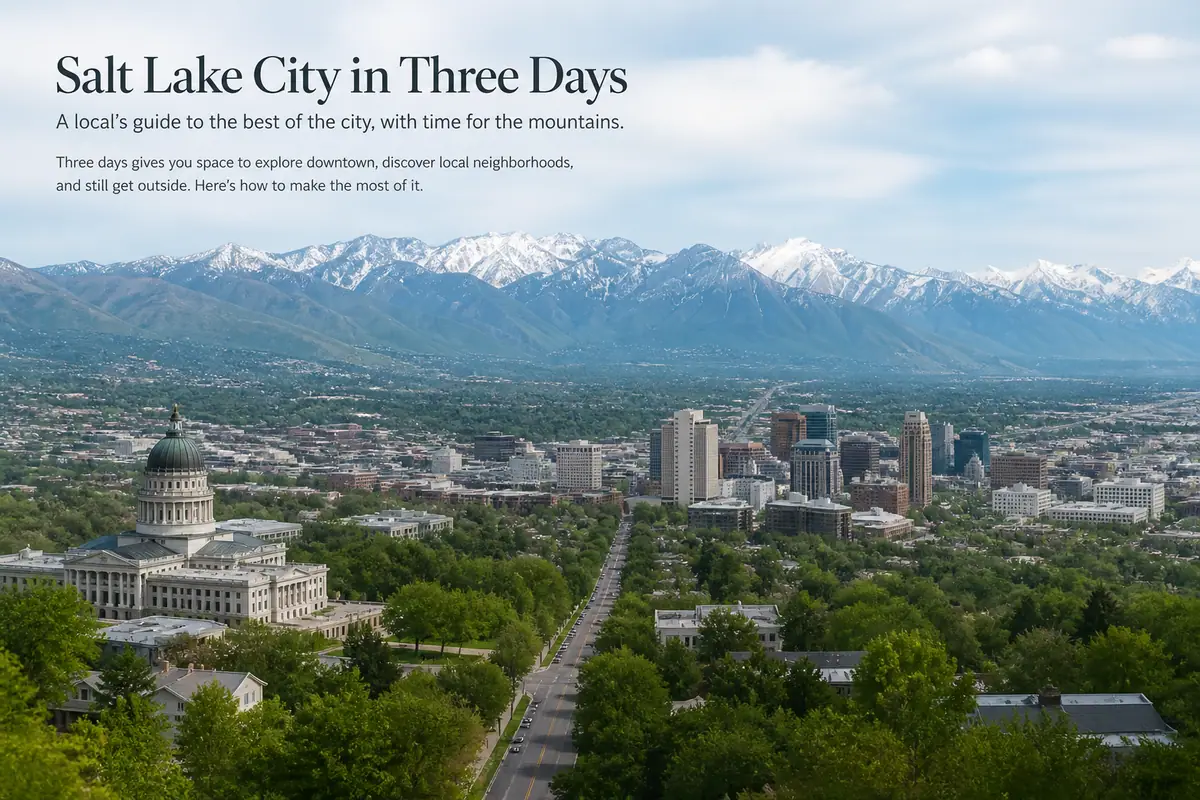
Three days is Salt Lake City’s sweet spot: one for the city, one for the foothills, and one for the Great Salt Lake or a deeper museum-and-neighborhood day.
Quick read
Key takeaways
- Three days gives the city and mountains room to breathe.
- Choose one major outdoor outing per day.
- Downtown is compact; the landscapes beyond it are not.
- Keep a weather-sensitive day flexible.
Turn this read into a trip
Start planning Salt Lake City
If this guide is pointing you toward Salt Lake City, jump into the destination guide for itinerary ideas, stays, restaurants, and a faster next step.
Plan with fewer surprises
Practical notes from the related destination guide
Use these guide details to shape the trip, then confirm operational information with the linked official source before you go.
Salt Lake City
Typical stay: 2 to 3 days · Getting around: mixed
- Do not treat the mountains as a backdrop you can casually squeeze in after lunch. Pick one canyon or island day and let weather lead.
- Downtown is compact enough for a short stay; Antelope Island, the canyons, and Park City are not.
Guide note: Downtown, Temple Square, and the convention district are easy on foot and TRAX helps on a few core corridors. Use a car or rideshare for canyon days, Antelope Island, and Park City; check current road, weather, trail, parking, and transit conditions before committing to an alpine plan.
Official Temple Square informationOpen the Salt Lake City guideWhere to go next
Open the destination guides behind this guide.
Use the full destination pages when you are ready to move from advice into actual trip shaping.
The short answer
Here is the call: Three days is the smarter shape for Salt Lake City: downtown gets its day, and the mountains do not become a rushed errand.
Salt Lake City rewards a little editing. Its pleasures are not all stacked on the same block, but they are close enough that a thoughtful plan feels roomy rather than ambitious.
- Plan three days for a first visit that includes a real outdoor outing.
- Two days work if you choose either Antelope Island or a canyon, not both.
- Give the Natural History Museum and Red Butte the same half-day.
- The wrong fit is a schedule that calls every mountain stop “nearby.”
What goes wrong
Visitors see the city’s tidy grid and assume the surrounding landscape is equally tidy. It is not. A canyon outing needs driving time, a parking plan, water, and enough daylight to be enjoyable instead of merely completed.
The temptation is to add one more scenic stop because it appears close on a map. That is how a good Salt Lake day becomes a procession of windshields, trailhead lots, and meals eaten too late.
The plan that actually works
Start downtown with Temple Square, the Capitol, and a meal you genuinely want. Use the next day for the Natural History Museum and Red Butte Garden, or for a canyon if the forecast is clean. Save the third day for Antelope Island, a longer mountain outing, or a deliberately slow food-and-neighborhood day.
Check current trail conditions, canyon road rules, parking systems, museum hours, and transit service close to departure. Those details change quickly; the value of leaving one outing loose does not.
The call I would make
Three days. Not because Salt Lake City needs a grand tour, but because the best version has room for one surprise: clear mountain weather, a long lunch, a museum that lands harder than expected. The city gets better when it is not forced to audition every hour.
What people get wrong
They treat Temple Square, Red Butte Garden, and Big Cottonwood Canyon as three nearby appointments. They are not. The distance is manageable; the friction comes from parking, weather, tired legs, and the small decisions that pile up when the day is already full.
What repeat visitors figure out faster
A return visit makes the city simpler. Book early for Takashi or Valter’s Osteria, let the Natural History Museum carry a wet afternoon, and save the canyon for a morning when you can leave room for a slow lunch afterward.
What to skip, what is overrated, and what is worth planning ahead
Skip the temptation to turn every skyline view into a stop. Plan ahead for a dinner reservation, Antelope Island access, and any timed museum entry. Do not make a late canyon start just because the map says it is close.
Keep planning
Read Where to Stay in Salt Lake City: Downtown, Central Ninth, or the Avenues?
This guide pairs well with the section you just read and gives you another concrete next step instead of leaving the planning half-finished.
Open related guideWhat people only notice once they are there
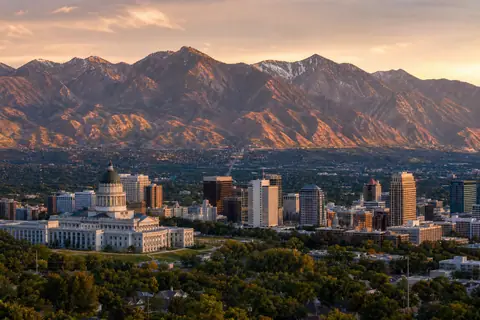
The mountains change the scale of the city. On a clear morning they feel almost close enough to touch; by afternoon, heat, traffic, and weather can make a casual outing feel like a real commitment. That contrast is part of Salt Lake City’s charm.
Quick Salt Lake City planner
Best for travelers who will protect one city day and one outdoor day. Wrong fit: anyone trying to collect Temple Square, Antelope Island, and a canyon before dinner. Protect this first: a weather-flexible Wasatch morning. If time shrank, keep downtown and one memorable meal intact.
- Do not squeeze Antelope Island into a museum day.
- Skip the late canyon start; parking and tired legs turn it into a regret.
- The wrong move is treating every scenic turnout as mandatory.
- A weather warning is a reason to reset, not to force the hike.
The mistake people regret fastest
They schedule a scenic morning after a late dinner, ignore the weather, then try to rescue the plan with another destination. Salt Lake City is generous to travelers who can leave one thing undone. It is much less generous to anyone determined to make the map confess.