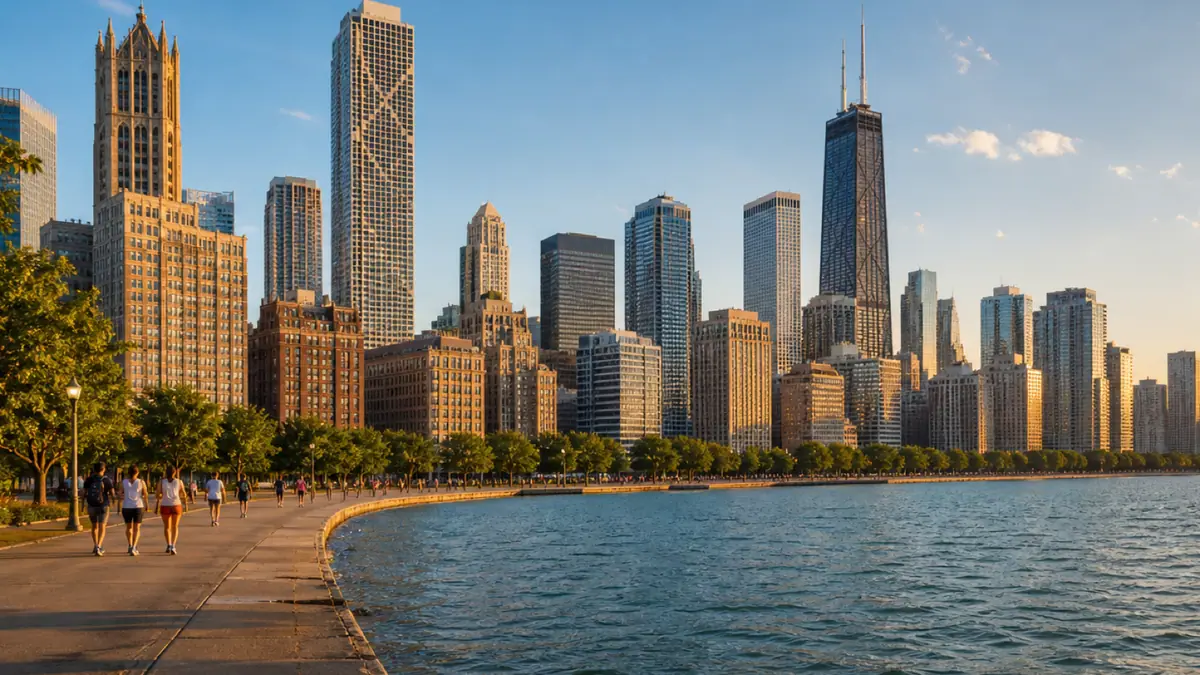
Chicago is one of the easiest cities to rescue with a better flexible plan when weather shifts your priorities.
Quick read
Key takeaways
- Chicago becomes easier when the itinerary can pivot without breaking.
- A weather-flex plan is a stronger plan overall.
- Chicago shines when architecture, lakefront space, neighborhoods, and real meals all share the trip instead of competing with each other.
- When it clicks, Chicago feels big but legible, with enough structure to be fun and enough breathing room to stay comfortable.
Turn this read into a trip
Start planning Chicago
If this guide is pointing you toward Chicago, jump into the destination guide for itinerary ideas, stays, restaurants, and a faster next step.
Plan with fewer surprises
Practical notes from the related destination guide
Use these guide details to shape the trip, then confirm operational information with the linked official source before you go.
Chicago
Typical stay: 3 to 4 days · Getting around: walkable
- Book architecture cruises, headline restaurants, and games ahead in peak season.
- Use trains for major neighborhood shifts when traffic is heavy.
Guide note: Fly into ORD and stay fairly central; this visit usually works best with walking, short rideshares, and only occasional transit or parking decisions.
Official Chicago Architecture Center informationOpen the Chicago guideWhere to go next
Open the destination guides behind this guide.
Use the full destination pages when you are ready to move from advice into actual trip shaping.

Why weather matters less than people think
Chicago works better when you stop asking every good idea to matter equally. Chicago comes together better when one major sight shares the plan with something slower and more local.
May to October is the cleanest window for getting Chicago in the form people actually picture when they book it. In Chicago, the better question is not whether the weather shifts. It is whether your plan knows how to shift with it without losing the whole stretch.
The famous answer is often the one people regret forcing. Here, the plan that lets the city keep some air between anchors should survive the edit before the plan that feels like homework with a skyline does.
- Do not reduce Chicago to the serious sights. The plan that lets the city have room between anchors holds up better in real life.
The short answer
Pick one main thing in Chicago and build around it. Chicago reads better when one major sight shares the city day with something slower and more local.
If you are torn, give the prime hours to Architecture in Full, build the meal around Lou Malnati's, and let Lincoln Park stay optional unless the first part of the plan still feels strong.
- Choose this if travelers who want city breaks and food without a lot of friction.
- Skip this if travelers who only like trips at full volume.
- Do not give up on this. Chicago reads better when one major sight shares the day with something slower and more local.
- A smart day shape is simple. Start with Architecture in Full, eat around Lou Malnati's, and only then decide whether Lincoln Park has earned the second move.
- Editor's call is simple. Keep the plan that lets the city stop feeling crowded between anchors. Cut the plan that feels like homework with a skyline first.
Quick city planner
The version of Chicago I would choose gives Architecture in Full the prime hours, Lou Malnati's the meal, and leaves the rest of the city day optional.
- The best first move is simple. Start with Architecture in Full.
- The best reset move is simple. Leave room for a real meal around Lou Malnati's.
- Do not force the second move if the first one already made the city day.
- Watch for this first. The lakefront and neighborhoods get treated like filler around the big sights.
- A better reset is simple. Chicago works better when one major sight shares the whole stretch with something slower and more local.
What shifts once the trip is actually happening
The Loop & Downtown, Lincoln Park, and Wicker Park are not interchangeable. Each one pushes the city day in a different direction, so Chicago works better when one area gets to lead.
The stronger move is to start with Architecture in Full, put the meal somewhere with a real sense of place like Lou Malnati's and Girl & the Goat, and only then adds Chicago Riverwalk and Loop if there is still energy for it.
One local friction point worth planning around is simple. The lakefront and neighborhoods get treated like filler around the big sights. The better rule here is Chicago pays off better when one major sight shares the whole stretch with something slower and more local.
- If one signature anchor gets the real block, make it Architecture in Full.
- Do not split the same half-day between The Loop & Downtown and Lincoln Park unless the contrast is the whole point. Most of the time, that just burns energy.
- Fly into ORD and stay fairly central; this visit is easiest with walking, short rideshares, and only occasional transit or parking decisions
What the place asks from you in real life
Trips here get shakier when the lakefront and neighborhoods get treated like filler around the big sights. People rarely picture that part while booking, but it decides whether it feels smooth or irritating.
First-timers notice too late that people try to make every block feel important. The plain rule on the ground is Chicago pays off better when one major sight shares the plan with something slower and more local.
A dinner neighborhood often tells you more about the city than a second museum does. The city improves fast once you stop trying to win the itinerary. Do not reduce Chicago to the serious sights.
- The first-timer mistake is people try to make every block feel important.
- Chicago pays off better when one major sight shares the plan with something slower and more local.
- The city improves fast once you stop trying to win the itinerary.
- Don't reduce Chicago to the serious sights.
The mistake people regret fastest
The regret here is often realizing the lakefront and dinner neighborhoods got treated like filler. In Chicago, the faster test is whether you are building the plan that lets the city open up between anchors or the plan that feels like homework with a skyline.
Do not reduce Chicago to the serious sights. A good Chicago day wants one big thing and one neighborhood that lingers.
The plan that needs the biggest explanation is the one to cut first. The famous answer is often the one people regret forcing. Here, the plan that lets the city have room between anchors should survive the edit before the plan that feels like homework with a skyline does.
- The regret here is often realizing the lakefront and dinner neighborhoods got treated like filler.
- Skip the plan that feels like homework with a skyline.
- Keep the plan that lets the city open up between anchors at the center of the trip.
Build with pivots in mind
A strong weather-flex plan pairs outdoor anchors with indoor or lower-stakes alternatives that still feel true to Chicago. That way the city day changes shape, not quality.
This produces a stronger itinerary even if the forecast behaves.
Good weather-flex planning also reduces stress the night before. If you already know your indoor backup, your scenic backup, and the meal or neighborhood that can absorb either one, the trip feels steadier.
Pick the version you would still be happy to repeat on a slightly tired day. That means keeping the plan that lets the city open up between anchors at the center. The mood often turns on a much smaller decision than people expect.
What a resilient trip feels like
You spend less time rescuing the itinerary and more time actually enjoying what is still in front of you.
3 to 4 days is the range where Chicago stops feeling skimmed and starts feeling like a real stay.
How to pivot without wasting the day
A weather shift does not have to flatten the itinerary if you already know which parts of the trip rely on views, which rely on neighborhood texture, and which work just as well indoors. The best backup plan is a reordered plan, not a desperate replacement plan.
That is also why flexible cities reward travelers who think in modules. One scenic module, one museum or market module, and one food-led module that can absorb whatever the sky is doing. Lead with Architecture in Full. Let Chicago Riverwalk and Loop be the second move, not a rushed afterthought.
- Move the most weather-sensitive block to the best-looking window instead of insisting on the original order.
- Keep one indoor anchor and one restaurant-friendly neighborhood in reserve.
- Check current ferry, viewpoint, or attraction conditions directly if the trip depends on them that day.
What repeat visitors figure out faster
Chicago gets more enjoyable once you stop trying to prove how much of it you covered.
A surprising amount of trip frustration traces back to treating Chicago like a museum list rather than a city with strong neighborhood rhythm.
- Skip packing every day with major sights and leaving no room for the lakefront or a real walkable neighborhood block. If it pulls the trip off center.
- If you upgrade one thing, make it spending on the hotel or meal that makes one Chicago evening feel memorable instead of merely full.
- The best base makes both lakefront movement and dinner neighborhoods easy to fold into the same stay.
What to skip, what is overrated, and what is worth planning ahead
Chicago can look great on paper and still land flat once you are actually in it.
The fix is subtraction. Cut the parts that do not really serve the reason you picked Chicago in the first place.
- Skip packing every day with major sights and leaving no room for the lakefront or a real neighborhood stretch.
- Packing every day with major sights and leaving no room for the lakefront or a real district run.
- If you book one thing early, make it the hotel or meal that makes one Chicago evening feel memorable instead of merely full.
- Leave room for the block that should absorb mood, weather, recovery, or the better-than-expected neighborhood moment.
- For a first night, one easy arrival move that reinforces the city's rhythm instead of testing your stamina.
Keep planning
Read The Best Chicago Weekend Depends on Your Neighborhood Mood
This guide pairs well with the section you just read and gives you another concrete next step instead of leaving the planning half-finished.
Open related guideWhat people get wrong
The most common mistake is trying to make every good idea fit into the same trip. That produces a version of Chicago that is busier, flatter, and less personal than it needs to be.
The better trip comes from choosing what deserves real emphasis and letting the rest support it instead of compete with it.
- Do not turn optional ideas into obligations just because they look good on a list.
- Let one clear priority shape the best hours of the city day.
- If the itinerary starts reading like proof of effort, simplify it.