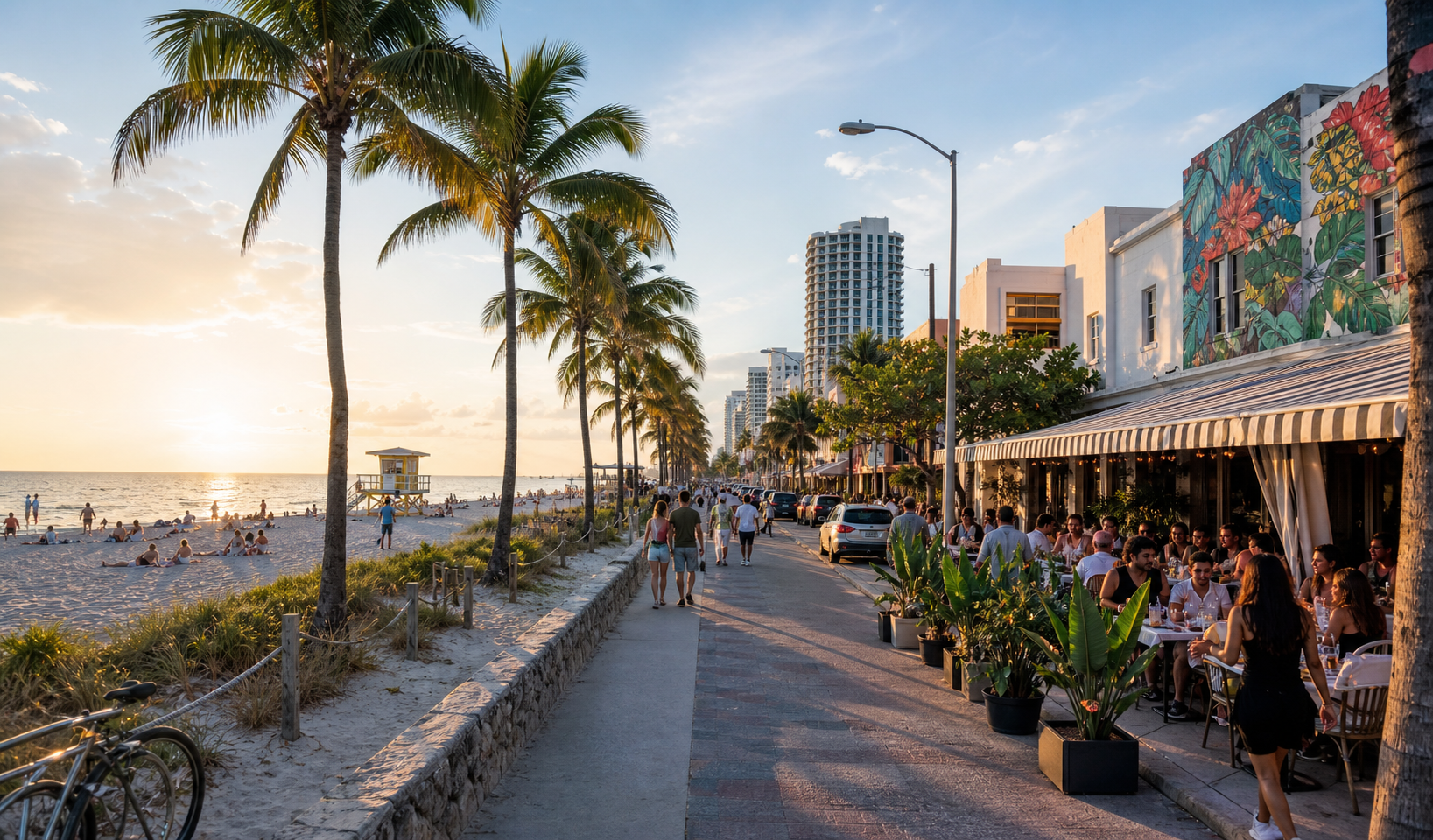
Miami gets clearer once you decide whether the beach should carry the trip or whether the city's neighborhoods, food, and design energy should do more of the work.
Quick read
Key takeaways
- Miami can support a cleaner city stay or a broader city-and-coast blend.
- The right answer depends on whether you want focus or range.
- Miami is strongest when beaches, Cuban and global dining, design-heavy neighborhoods, and late-night energy are each given a clear lane instead of being forced into one continuous sprint.
- Stay where your preferred version of Miami, whether that is beach, nightlife, dining, or a calmer bayfront rhythm, is easiest to repeat.
Turn this read into a trip
Start planning Miami
If this guide is pointing you toward Miami, jump into the destination guide for itinerary ideas, stays, restaurants, and a faster next step.
Where to go next
Open the destination guides behind this guide.
Use the full destination pages when you are ready to move from advice into actual trip shaping.
What the city-only version gets right
Miami is strongest when beaches, Cuban and global dining, design-heavy neighborhoods, and late-night energy are each given a clear lane instead of being forced into one continuous sprint.
3 to 5 days is the range where Miami stops feeling skimmed and starts feeling like a real stay. A city-focused version of Miami usually feels sharper, easier to pace, and more coherent when meals, walking, and atmosphere are the main goals.
The on-the-ground version
On the ground in Miami, South Beach, Brickell and Downtown Miami, and Wynwood, Design District, and Coconut Grove each pull the trip in a different direction, and South Beach and Art Deco Historic District are the anchors that deserve real room in the day. That is what separates useful local advice from generic destination copy.
A stronger version of the day lets South Beach carry the main sightseeing block, builds the meal around Zak the Baker and The Front Porch Cafe as the food-led stops that make the meal feel tied to the place, and leaves room for Art Deco Historic District instead of forcing one more cross-town errand just to make the itinerary look fuller than it feels.
Fly into MIA and expect a mixed transportation rhythm: some neighborhoods are walkable once you are there, but Miami usually works best with selective rideshares and only occasional driving or parking decisions
- If you only prioritize one signature anchor, give South Beach enough time to breathe.
- Do not split the same half-day between South Beach and Brickell and Downtown Miami unless the contrast is the whole point. Most of the time, that just burns energy.
- Fly into MIA and expect a mixed transportation rhythm: some neighborhoods are walkable once you are there, but Miami usually works best with selective rideshares and only occasional driving or parking decisions
What the added coast changes
Bringing in the coast can soften the trip and add range, but it also introduces more movement and a slightly broader identity. That is good when the trip wants contrast, and less useful when the trip wants focus.
Stay where your preferred version of Miami, whether that is beach, nightlife, dining, or a calmer bayfront rhythm, is easiest to repeat.
That decision also changes how much of the trip you spend in transit. A focused city stay usually gives you cleaner days, while a city-plus-coast plan works best when you actively want the tonal contrast more than the extra efficiency.
How to choose the better version
If the destination's city character is the thing you are paying for emotionally, keep the trip tighter. If the trip wants relief and scenic breathing room, let the coast share more of the load.
November to April is the cleanest window for getting Miami in the form people actually picture when they book it.
At its best, Miami feels hot, stylish, and much more multidimensional than the stereotype that books it.
How to pair the city with the coast intelligently
If you add the coast, make sure it changes the trip's mood in a meaningful way. A quick glance at the water is rarely enough to justify extra movement, but a real coastal half-day can broaden the trip nicely if you genuinely want relief from the city pace.
The strongest version usually gives the city the denser, more structured blocks and saves the coastal side for the part of the itinerary that benefits from fewer obligations and more breathing room.
- Keep the city version if food, walking, and compactness are the real point of the trip.
- Add the coast only if you want a distinct second tone, not just another box checked.
- Look up current parking, beach-access, or seasonal logistics before promising yourself a same-day city-and-coast sprint.