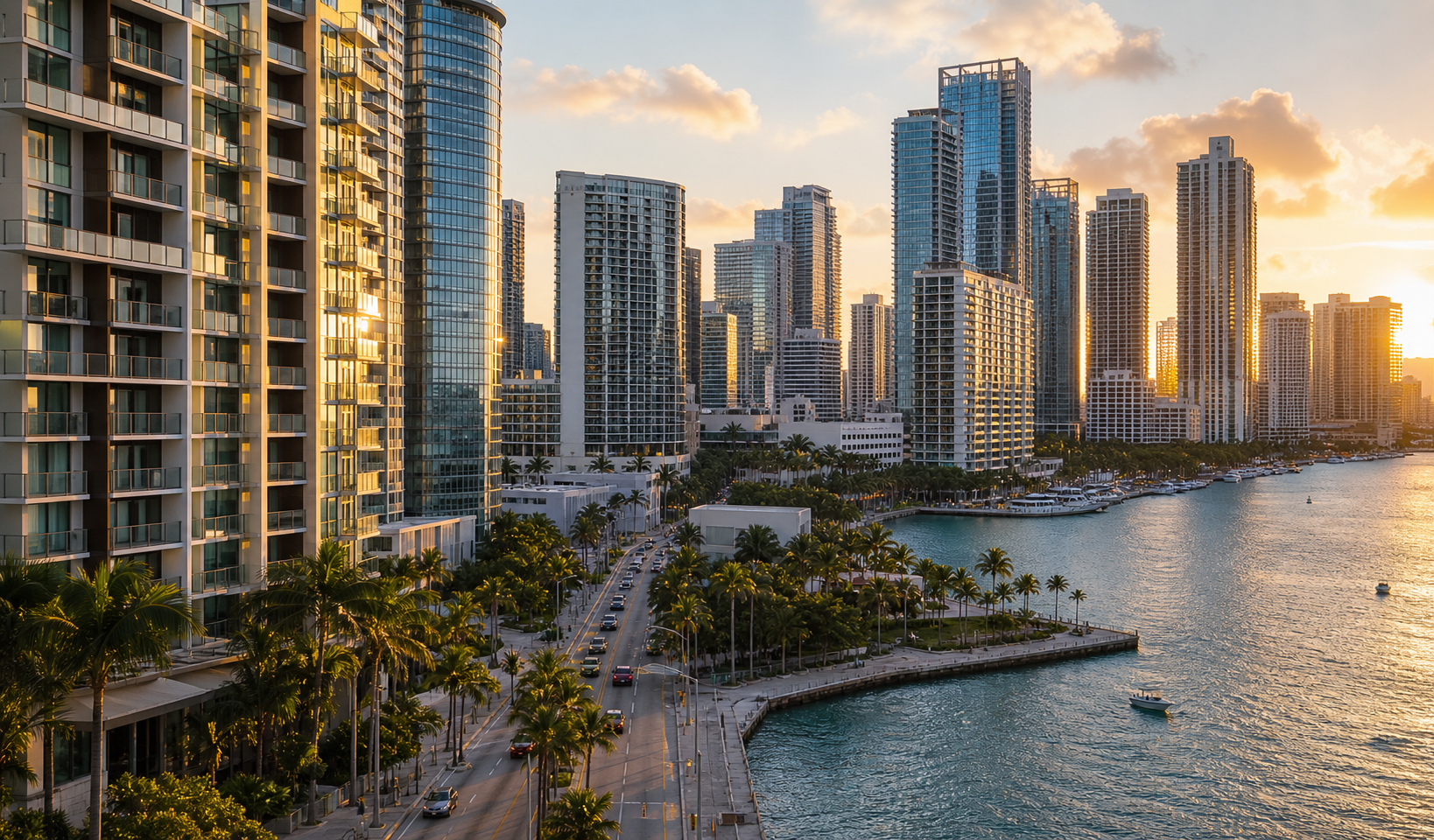
Miami gets much easier once one zone is allowed to shape the trip instead of every neighborhood competing equally.
Quick read
Key takeaways
- Miami gets easier when one zone or district is allowed to anchor the trip.
- The planning trap is treating Miami like one uniform strip when the city changes dramatically by neighborhood, time of day, and how much beach-versus-city energy you actually want.
- Geography shapes the mood of the weekend more than first-time visitors expect.
- Stay where your preferred version of Miami, whether that is beach, nightlife, dining, or a calmer bayfront rhythm, is easiest to repeat.
Turn this read into a trip
Start planning Miami
If this guide is pointing you toward Miami, jump into the destination guide for itinerary ideas, stays, restaurants, and a faster next step.
Where to go next
Open the destination guides behind this guide.
Use the full destination pages when you are ready to move from advice into actual trip shaping.
Why geography is the real planning problem
Miami is strongest when beaches, Cuban and global dining, design-heavy neighborhoods, and late-night energy are each given a clear lane instead of being forced into one continuous sprint.
The planning trap is treating Miami like one uniform strip when the city changes dramatically by neighborhood, time of day, and how much beach-versus-city energy you actually want. 3 to 5 days is the range where Miami stops feeling skimmed and starts feeling like a real stay. Destinations like Miami become much easier once you stop pretending the whole map deserves equal attention. South Beach and Brickell and Downtown Miami should not feel interchangeable because they change the tone of the day in completely different ways.
What actually changes the trip in Miami
On the ground in Miami, South Beach, Brickell and Downtown Miami, and Wynwood, Design District, and Coconut Grove each pull the trip in a different direction, and South Beach and Art Deco Historic District are the anchors that deserve real room in the day. That is what separates useful local advice from generic destination copy.
A stronger version of the day lets South Beach carry the main sightseeing block, builds the meal around Zak the Baker and The Front Porch Cafe as the food-led stops that make the meal feel tied to the place, and leaves room for Art Deco Historic District instead of forcing one more cross-town errand just to make the itinerary look fuller than it feels.
Fly into MIA and expect a mixed transportation rhythm: some neighborhoods are walkable once you are there, but Miami usually works best with selective rideshares and only occasional driving or parking decisions
- If you only prioritize one signature anchor, give South Beach enough time to breathe.
- Do not split the same half-day between South Beach and Brickell and Downtown Miami unless the contrast is the whole point. Most of the time, that just burns energy.
- Fly into MIA and expect a mixed transportation rhythm: some neighborhoods are walkable once you are there, but Miami usually works best with selective rideshares and only occasional driving or parking decisions
How one district can improve the whole trip
When one neighborhood or zone is allowed to anchor the stay, decisions start compounding in a good way. Meals connect more naturally, transitions feel smaller, and the city starts to feel coherent.
That is better than chasing perfect coverage. Do not ping-pong between South Beach and Brickell and Downtown Miami just because both look good on the map. Pick the side that fits the day and let it lead.
The real planning trick is to stop pretending that crossing town is neutral. In a place like Miami, travel time changes mood, appetite, and how much spontaneity is left once you arrive. Do not ping-pong between South Beach and Brickell and Downtown Miami just because both look good on the map. Pick the side that fits the day and let it lead. If you try to force South Beach, South Beach, and Brickell and Downtown Miami into the same loose block, you will mostly remember the transitions.
What to prioritize in the base
Stay where your preferred version of Miami, whether that is beach, nightlife, dining, or a calmer bayfront rhythm, is easiest to repeat.
The best district is the one that makes your version of Miami easiest to repeat, not the one that looks most central in theory. Fly into MIA and expect a mixed transportation rhythm: some neighborhoods are walkable once you are there, but Miami usually works best with selective rideshares and only occasional driving or parking decisions
How to keep transit from eating the day
The easiest version of a spread-out city is built in clusters. Group one or two neighborhoods, one meal, and one view or activity that naturally live near each other, then stop. The day feels bigger when you are not constantly resetting in transit. South Beach and Brickell and Downtown Miami should not feel interchangeable because they change the tone of the day in completely different ways.
That approach is especially important on shorter trips, when a badly placed lunch or one extra cross-city jump can quietly erase the rest of the afternoon.
- Build days by side of city, not by list order.
- Treat crossing town as the main event of that block, not an afterthought between other plans.
- Fly into MIA and expect a mixed transportation rhythm: some neighborhoods are walkable once you are there, but Miami usually works best with selective rideshares and only occasional driving or parking decisions