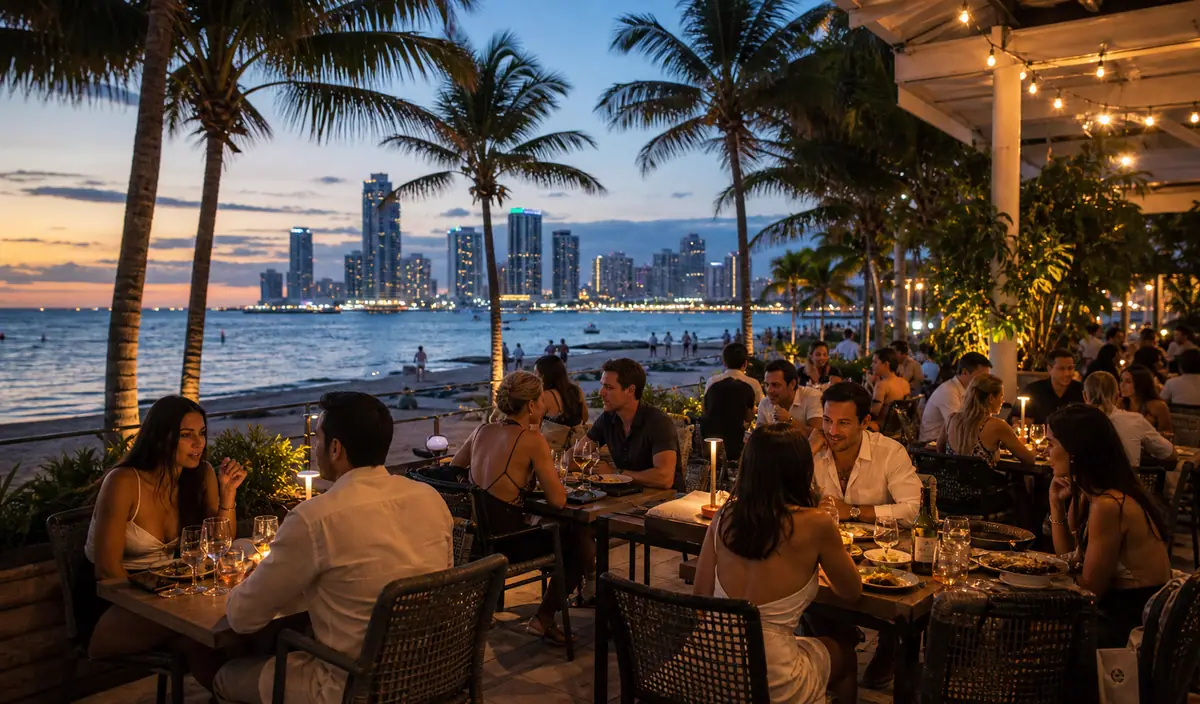
Miami can support several excellent vacations, but the trip gets better once you name which version you actually want.
Quick read
Key takeaways
- Miami can support several kinds of trips, but it rarely rewards trying to prioritize all of them equally.
- Pick a lane. Decide what Miami is actually for before you start filling the map.
- First-timers get Miami wrong when people assume the most famous neighborhood must also be the most useful one.
- Protect the plan loyal to one Miami identity at a time. That is the version people actually want to repeat.
Turn this read into a trip
Start planning Miami
If this guide is pointing you toward Miami, jump into the destination guide for itinerary ideas, stays, restaurants, and a faster next step.
Plan with fewer surprises
Practical notes from the related destination guide
Use these guide details to shape the trip, then confirm operational information with the linked official source before you go.
Miami
Typical stay: 3 to 5 days · Getting around: mixed
- Choose one area per day; Miami traffic makes casual cross-town hopping expensive in time.
- Keep beach plans early and leave room for weather changes.
Guide note: Fly into MIA and expect a mixed transportation rhythm: some neighborhoods are walkable once you are there, but Miami usually works best with selective rideshares and only occasional driving or parking decisions.
Official Art Deco Historic District informationOpen the Miami guideWhere to go next
Open the destination guides behind this guide.
Use the full destination pages when you are ready to move from advice into actual trip shaping.

Where Miami trips go sideways
Miami gets better once one priority is allowed to run the plan instead of competing with everything else. Miami needs one lane per day if you want it to feel hot rather than hectic.
Miami is strongest when beaches, Cuban and global dining, design-heavy neighborhoods, and late-night energy are each given a clear lane instead of being forced into one continuous rush. 3 to 5 days is the range where Miami stops feeling skimmed and starts feeling like a real stay.
First-timers get Miami wrong when people assume the most famous neighborhood must also be the most useful one. The part of Miami you can repeat easily matters more than the part you can name quickest.
The most evenly balanced answer on paper is not always the one that feels best once the trip starts. Here, that means cutting the plan asking every neighborhood to perform equally before you cut the plan loyal to one Miami identity at a time.
- Pick a lane. The plan asking every neighborhood to perform equally is the part to drop first.
If you only keep one idea from this guide
Pick one main thing in Miami and build around it. Miami needs one lane per day if you want it to feel hot rather than hectic.
If you are torn, give the prime hours to Art Deco Historic District, build the meal around Zak the Baker, and let Brickell and Downtown Miami stay optional unless the first part of the day still feels strong.
- This works best for travelers who can choose one version of Miami per day.
- This disappoints if travelers trying to make every neighborhood do the same job.
- Keep this intact. Miami needs one lane per day if you want it to feel hot rather than hectic.
- A smart day shape is simple. Start with Art Deco Historic District, eat around Zak the Baker, and only then decide whether Brickell and Downtown Miami has earned the second move.
- Editor's call is simple. Keep the plan loyal to one Miami identity at a time. Cut the plan asking every neighborhood to perform equally first.
Quick zone planner
In Miami, let Art Deco Historic District take the lead, give Zak the Baker the meal window, and resist adding more just because the map makes it look possible.
- The best first move is simple. Start with Art Deco Historic District.
- The best reset move is simple. Leave room for a real meal around Zak the Baker.
- Don't force the second move if the first one already made the day.
- Watch for this first. Too many different versions of Miami are forced into one day.
- A better reset is simple. Miami needs one lane per day if you want it to feel hot rather than hectic.
What actually changes once you are there
South Beach, Brickell and Downtown Miami, and Wynwood, Design District, and Coconut Grove do different jobs. Miami gets cleaner once you stop asking all of them to share the same day evenly.
A better day gives Art Deco Historic District the prime hours, lets lunch or dinner revolve around Zak the Baker and The Front Porch Cafe, and South Beach stays optional instead of mandatory.
The part people underestimate is this: too many different versions of Miami are forced into one day. Plan around that first, then let the rest follow. Miami needs one lane per day if you want it to feel hot rather than hectic.
- If one stop gets the real block of time, let it be Art Deco Historic District.
- South Beach and Brickell and Downtown Miami both deserve attention, but not in the same rushed half-day.
- Fly into MIA and expect a mixed transportation rhythm. Some neighborhoods are walkable once you are there, but Miami is easiest with selective rideshares and only occasional driving or parking decisions
What people only notice once they are there
Miami starts feeling off when too many different versions of Miami are forced into one day. People do not see that coming when they book, but it changes how the trip feels.
A lot of first trips wobble for the same reason. People assume the most famous neighborhood must also be the most useful one. A more useful local rule is Miami needs one lane per day if you want it to feel hot rather than hectic.
The part of Miami you can repeat easily matters more than the part you can name quickest. The city gets more legible once you stop demanding equal value from every neighborhood. Pick a lane.
- The first-timer mistake is people assume the most famous neighborhood must also be the most useful one.
- Miami needs one lane per day if you want it to feel hot rather than hectic.
- The city gets more legible once you stop demanding equal value from every neighborhood.
- Pick a lane.
The mistake people regret fastest
The regret shows up when one day tries to be beach, design district, dinner, and nightlife all at once. Ask yourself if you are planning the plan loyal to one Miami identity at a time or the plan asking every neighborhood to perform equally.
Pick a lane. Miami works better when each day belongs to one version of the city.
If a plan needs a long defense before you book it, it is probably the wrong plan here. Roundup logic is how people talk themselves into the weaker real-life pick.
Here, that means cutting the plan asking every neighborhood to perform equally before you cut the plan loyal to one Miami identity at a time.
- The regret starts when one day tries to be beach, design district, dinner, and nightlife all at once.
- Skip the plan asking every neighborhood to perform equally.
- Keep the plan loyal to one Miami identity at a time at the center of the trip.
How to stop overbooking the wrong version
Pick a lane. Ask what would still make it worth taking if everything else got trimmed back. If the answer is food, scenery, parks, neighborhoods, or pure ease, let that answer lead the plan. Lead with Art Deco Historic District. Let South Beach be the second move, not a rushed afterthought.
Most confusion in Miami comes from treating several good trip shapes as if they are all equally important.
Art Deco Historic District works better when the rest of the day keeps faith with South Beach or Brickell and Downtown Miami instead of trying to touch everything at once.
That kind of clarity also helps with budget decisions. Once you know what it is really for, it becomes much easier to spot which add-ons improve the stay and which ones only add movement.
This place stops paying you back once too many different versions of Miami are forced into one day. Do not ping-pong between South Beach and Brickell and Downtown Miami just because both look good on the map. Commit to the side that makes the day simpler. Art Deco Historic District reads better when the rest of the day keeps the focus on South Beach or Brickell and Downtown Miami instead of trying to touch everything at once. If you try to force Art Deco Historic District, South Beach, and Brickell and Downtown Miami into the same loose block, you will mostly remember the transitions.
If you only get one strong day, protect the plan that still sounds good when everyone is tired. That means letting the plan loyal to one Miami identity at a time run the day instead of apologizing for it.
This is the part people tend to notice only after they are already committed.
What a cleaner Miami plan feels like
Once the center of gravity is obvious, the rest of the itinerary becomes easier to judge. Activities either support the trip you want or they do not.
This is a place where Art Deco Historic District deserves a real block of time and South Beach works better as the second move than as a rushed add-on.
A quick way to pressure-test the plan
Before booking too much, imagine the trip losing one day or one major reservation. If the vacation still makes sense, the plan is probably clear enough. If it suddenly falls apart, you may be trying to force too many versions of Miami into the same stay.
That exercise is especially useful in places with several good identities, because the strongest trip is the one that can absorb a little weather, fatigue, or spontaneity without losing itself. One bad fit is simple. This goes sideways fast for travelers trying to make every neighborhood do the same job.
- Name the one part of the trip you would protect first if time shrank.
- If you are flying, start by pricing MIA first, then compare current schedules and ground-transfer ease before you book.
What repeat visitors figure out faster
Miami improves fast once you stop asking every neighborhood to do the same job.
A lot of weaker first drafts start with treating Miami like one uniform strip instead of a set of distinct trip modes.
- Skip trying to keep beach, nightlife, neighborhoods, and museums equally central every day. If it pulls the trip off center.
- If you upgrade one thing, make it paying for the base or meal that best matches your version of Miami rather than broad, flashy general luxury.
- Your stay should make your preferred Miami identity easiest to repeat, whether that is beach, dining, or nightlife.
What to skip, what is overrated, and what is worth planning ahead
Miami often disappoints for the same reason. The broad itinerary sounds stronger than the day itself feels.
Most of the improvement comes from trimming what does not support the real reason you picked Miami.
- Skip trying to keep beach, nightlife, neighborhoods, and museums equally central every day.
- Trying to keep beach, nightlife, neighborhoods, and museums equally central every day.
- You expect one neighborhood to deliver beach, food, nightlife, and ease all at once.
- If you book one thing early, make it the base or meal that best matches your version of Miami rather than broad, flashy general luxury.
- Leave room for the block that should absorb mood, weather, recovery, or the better-than-expected neighborhood moment.
- For a first night, one strong dinner in the version of Miami you actually came for, then an easy read on your energy.
Keep planning
Read Should Your Miami Trip Stay Beach-Led or Neighborhood-Led?
This guide pairs well with the section you just read and gives you another concrete next step instead of leaving the planning half-finished.
Open related guideWhat people get wrong
The most common mistake is trying to make every good idea fit into the same trip. That produces a version of Miami that is busier, flatter, and less personal than it needs to be.
The better trip comes from choosing what deserves real emphasis and letting the rest support it instead of compete with it.
- Do not turn optional ideas into obligations just because they look good on a list.
- Let one clear priority shape the best hours of the day.
- If the itinerary starts reading like proof of effort, simplify it.