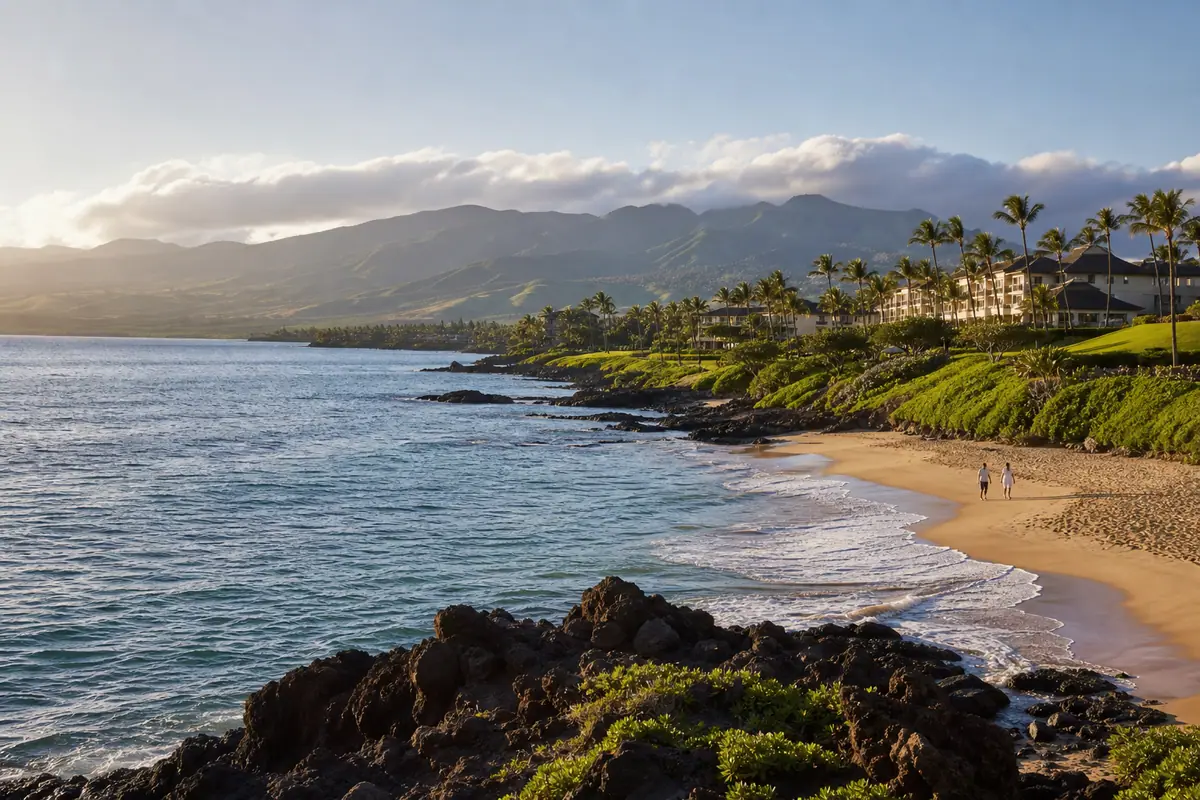
The best Maui base depends less on what looks central and more on whether your trip is beach-led, resort-led, or built around reducing drive fatigue.
Quick read
Key takeaways
- Maui gets easier when one zone or district is allowed to anchor the trip.
- The common mistake is trying to give South Maui, West Maui, Haleakala, and Hana equal weight in one compact stay and watching the island turn into a car trip.
- Geography shapes the feel of the weekend more than first-time visitors expect.
- Stay where your real repeat moves start easiest, then protect the island's bigger scenery with one or two dedicated days instead of constant sampling.
Turn this read into a trip
Start planning Maui
If this guide is pointing you toward Maui, jump into the destination guide for itinerary ideas, stays, restaurants, and a faster next step.
Plan with fewer surprises
Practical notes from the related destination guide
Use these guide details to shape the trip, then confirm operational information with the linked official source before you go.
Maui
Typical stay: 5 to 7 days · Getting around: car-recommended
- Do not plan both Haleakala and Hana back-to-back if your visit is short; the early starts stack up faster than people expect.
- Beach weather and driving weather are not the same on Maui, so leave at least one flex block for the clearer side of the island.
Guide note: Fly into OGG and expect your visit to work best with a rental car. Maui is not hard to drive, but it gets tiring when you force cross-island loops every day instead of letting one coast or one route lead at a time.
Official Haleakala Summit and Crater Day informationOpen the Maui guideWhere to go next
Open the destination guides behind this guide.
Use the full destination pages when you are ready to move from advice into actual trip shaping.

Where to let Maui start narrowing
In Maui, the hotel area matters most after the first outing.
The common mistake is trying to give South Maui, West Maui, Haleakala, and Hana equal weight in one compact stay and watching the island turn into a car trip. 5 to 7 days is the range where Maui stops feeling skimmed and starts feeling like a real stay.
Destinations like Maui become much easier once you stop pretending the whole map deserves equal attention.
A plan can look full and still feel disappointingly thin once you're in it.
- The best version of a trip is the one that still sounds good when you are tired.
What a smarter anchor district solves
When one neighborhood or zone is allowed to anchor the stay, decisions start compounding in a good way. Meals connect more naturally, transitions feel smaller, and the city starts to click.
That is better than chasing perfect coverage. Give Haleakala Summit and Crater Day the cleaner block and let Road to Hana be the second move, not the co-headliner.
The real planning trick is to stop pretending that crossing town is neutral. In a place like Maui, travel time changes mood, appetite, and how much spontaneity is left once you arrive.
The trip starts feeling thin once you are coordinating more than you are enjoying. Give Haleakala Summit and Crater Day the cleaner block and let Road to Hana be the second move, not the co-headliner. If you try to make Haleakala Summit and Crater Day and Road to Hana equal priorities in the same short window, one of them will turn into a rushed checkbox.
If you only get one strong day, protect the plan that still sounds good when everyone is tired. This is where the destination stops sounding good and starts being good, or not.
If you only keep one base rule in Maui
The right base in Maui keeps the repeat decisions simple. Think about coffee, dinner, getting back at night, and one more stop if the day still feels good.
If what you really want is the easier, more repeatable version of it, lean toward Maui. If you are actually trying to force travelers who need nonstop intensity, this is where the stay starts to drag.
- Go this route if travelers who want resort stays and scenic drives without a lot of friction.
- Not for travelers who need nonstop intensity.
- Guard this part. Make Haleakala Summit and Crater Day and dinner feel easy on the same day.
- A smart stay pattern is simple. Base near Maui, give Haleakala Summit and Crater Day the prime block, and let The Gazebo stay optional.
Quick island-base planner
Use the base to make the second and third decisions easier, not just arrival prettier. In Maui, that means the area that makes Haleakala Summit and Crater Day and dinner feel like one clean loop.
- On arrival night, keep it close to Kihei Caffe or another easy dinner zone so the stay starts smoothly.
- A better morning shape is to let your first outing happen from the neighborhood that already fits the trip's main mood.
- On tired days, if getting back to the hotel already feels like a chore, the base is not helping enough.
What actually changes once you pick the right part of Maui
Haleakala Summit and Crater Day and Road to Hana are a bad same-block combo unless the whole day is built around them.
The stronger move is to start with Haleakala Summit and Crater Day, put the meal somewhere with a real sense of place like Kihei Caffe and The Gazebo, and only then adds Road to Hana if there is still energy for it.
Do not plan both Haleakala and Hana back-to-back if your visit is short; the early starts stack up faster than people expect
- If one signature anchor gets the real block, make it Haleakala Summit and Crater Day.
- Fly into OGG and expect your visit to work best with a rental car
How to pressure-test the base before booking
The best district is the one that makes your version of Maui easiest to repeat, not the one that looks most central on a map. Do not plan both Haleakala and Hana back-to-back if your visit is short; the early starts stack up faster than people expect
How to keep transit from eating the day
The easiest version of a spread-out city is built in clusters. Group one or two neighborhoods, one meal, and one view or activity that naturally live near each other, then stop.
The day feels bigger when you are not constantly resetting in transit. Give Haleakala Summit and Crater Day the cleaner block and let Road to Hana be the second move, not the co-headliner.
That approach is especially important on shorter trips, when a badly placed lunch or one extra cross-city jump can quietly erase the rest of the afternoon. The trip starts feeling thin once you are coordinating more than you are enjoying.
- Build days by side of city, not by list order.
- Treat crossing town as the main event of that block, not an afterthought between other plans.
What people get wrong
People book the area that looks best on its own, then spend the trip dealing with the tradeoff. That is how you end up with a nice hotel and slightly annoying days.
The smarter base is the one that makes your repeat decisions simpler. Think about coffee, dinner, getting back at night, or slipping out for one more walk without turning it into a production.
- Don't pick prestige if convenience is what will improve the trip more.
- A slightly less glamorous area is the better pick if it keeps your best hours easier.
- Think about the second and third time you leave the hotel, not just arrival day.
What repeat visitors figure out faster
The first trip often gets built around the headline. The better return version of Maui leaves room for the part that makes the headline enjoyable: a calmer morning, a nearby meal, or simply not crossing town again.
If the day starts feeling like a sequence of transfer points, remove the least important stop. That is usually a better trade than racing the clock.
What to skip, what is overrated, and what is worth planning ahead
Do not treat proximity on a map as proof that two experiences belong in the same day. In Maui, the useful plan is the one that leaves enough time for the part you actually came to do.
Plan ahead only for the item that would genuinely disappoint you to lose—then let meals, small stops, and the second half of the day stay flexible.
Keep planning
Read How Many Days Do You Need in Maui?
This guide pairs well with the section you just read and gives you another concrete next step instead of leaving the planning half-finished.
Open related guideWhat people only notice once they are there
The friction is rarely the landmark itself. It is parking, weather, a long return to the hotel, or the moment a group realizes its energy is gone. Maui works better when the plan leaves room for that reality instead of treating it as a failure.
Use the first real delay as a signal to simplify the rest of the day, not as a reason to hurry harder.
The mistake people regret fastest
Trying to make every good idea fit is the fastest way to lose the reason for choosing Maui. Skip the least meaningful stop before you sacrifice the part of the trip you wanted most.
A slower plan is not an empty plan here; it is the difference between a useful memory and a day spent checking the time.